
bohemianwanderer – This slow-cooked tomato pasta builds deep flavor by caramelising passata before combining it with pasta. The recipe serves four and requires more than one hour.
Begin by placing a medium-sized, high-sided saucepan over medium-low heat. Choose a pan large enough to reduce excessive splattering during cooking.
Add 120ml of extra-virgin olive oil to the hot saucepan. Add three fresh bay leaves and two onions that have been peeled and thinly sliced.
Read More : Panathinaikos Sign Watford Midfielder Imran Louza
Season with a couple of pinches of sea salt. Cook the onions gently, stirring frequently to prevent them from taking on color.
Continue cooking until the onions become translucent and completely soft. This initial stage should develop sweetness without browning the onions.
Increase the heat to high once the onions are ready. Pour in 80ml of white wine and cook for several minutes.
Allow most of the wine to evaporate before continuing. The remaining mixture should become concentrated without retaining excessive liquid.
Reduce the heat to medium. Add 700g of passata and another couple of pinches of sea salt.
Stir the passata into the onion mixture until everything is evenly combined. Leave the sauce to simmer for 10 minutes without stirring.
The bottom of the saucepan should begin to caramelise during this stage. A deep red-brown crust should form where the tomato sauce contacts the pan.
If no crust has developed after 10 minutes, return the pan to the heat. Cook for several additional minutes until the caramelised layer appears.
Remove the pan from the heat once the crust has formed. Scrape the caramelised tomato from the bottom of the saucepan.
Stir the scraped tomato back into the sauce. This process intensifies the flavor and gives the sauce greater depth.
Be careful while scraping the pan because the concentrated sauce can splatter. Keep the saucepan stable and work carefully around the edges.
Return the saucepan to the stove. Reduce the heat and allow the sauce to simmer gently for another 30 to 45 minutes.
Stir the sauce approximately every five minutes during this second cooking stage. The sauce will gradually thicken and develop a deeper color.
Finish the Tomato Sauce With Pasta Water and Cheese
When ready to serve, cook 400g of your preferred pasta according to the package instructions. Suitable shapes include orecchiette, penne, spaghetti, and rigatoni.
Remove the pasta from the cooking water approximately one minute before it reaches the recommended cooking time. Reserve a ladleful of the starchy pasta water.
Bring the tomato sauce back to a gentle heat. Add the partially cooked pasta directly to the saucepan.
Toss the pasta and sauce thoroughly until the pasta becomes evenly coated. Continue cooking as the pasta finishes absorbing the sauce.
Add the reserved pasta water gradually rather than all at once. The starch helps emulsify the sauce and creates a smoother consistency.
Continue tossing while adding small amounts of water. Stop once the sauce reaches a thick but fluid consistency that coats the pasta.
Taste the finished pasta and adjust the seasoning if necessary. The amount of additional salt required will depend on the passata and cheese used.
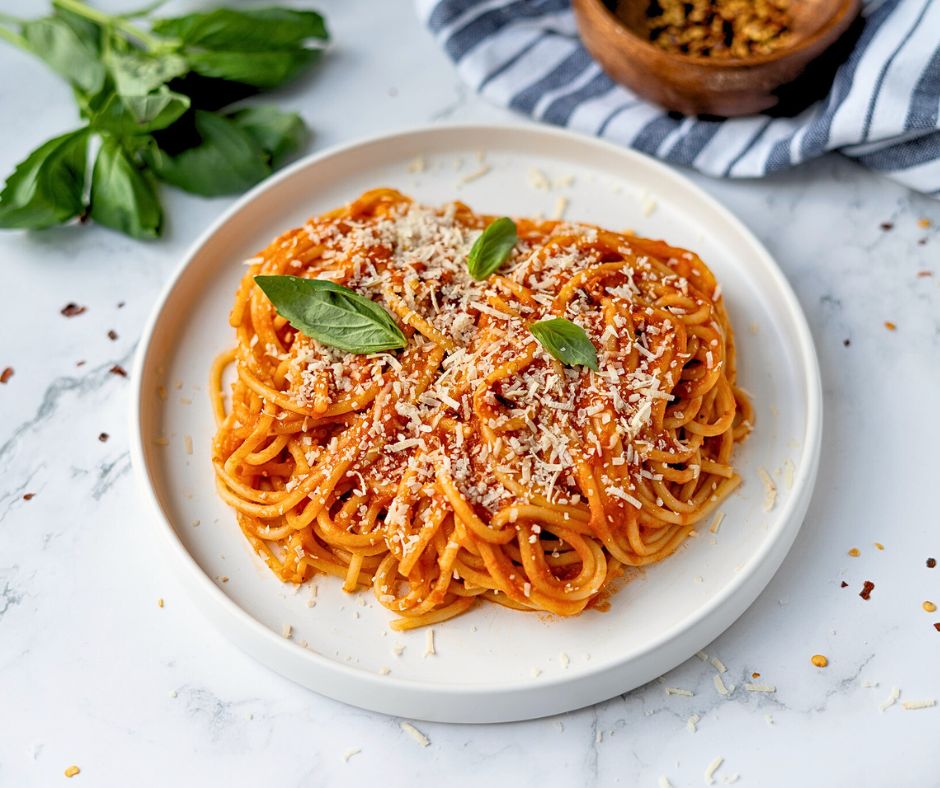
Transfer the pasta to serving plates or a large serving dish. Finish with a small drizzle of good-quality extra-virgin olive oil.
For additional richness, grate Parmigiano over the pasta. Pecorino or ricotta can also be used according to preference.
Pangrattato provides a crisp alternative to cheese. Sprinkle it over the pasta immediately before serving to preserve its texture.
The slow cooking process is central to the character of this recipe. Allowing the passata to form a dark crust before incorporating it into the sauce creates a deeper tomato flavor.
The onions provide sweetness and body while the bay leaves contribute subtle herbal notes. White wine adds acidity and helps balance the richness of the olive oil.
The final pasta water is equally important. Its starch helps bind the sauce to the pasta while preventing the finished dish from becoming dry.
This method works with several pasta shapes, allowing the recipe to adapt to whatever is available. Short shapes hold the thick sauce well, while spaghetti provides a more traditional presentation.