
bohemianwanderer – This tomato bulgur pilaf is a simple grain dish combining coarse bulgur wheat with herbs, spring onions and tomato paste. The recipe requires 30 minutes of soaking, 15 minutes of preparation and about 20 minutes of cooking. It makes four to six servings and can be served at room temperature.
The dish uses 250g of coarse bulgur wheat, which is soaked in cold water for 30 minutes before cooking. Eighty millilitres of extra-virgin olive oil provide the cooking base. The recipe also includes approximately 100g of spring onions, trimmed and thinly sliced.
Fresh herbs provide much of the dish’s character. Use one large bunch of flat-leaf parsley, which weighs approximately 200g before preparation. Remove the thick stalks, then finely chop the remaining leaves and thinner stems.
Use approximately 150g of fresh mint while it remains attached to the stalks. Pick the mint leaves, wash and dry them, then finely chop them before adding them to the bulgur. Together, the parsley and mint provide a fresh herbal element that balances the tomato-based mixture.
Prepare the tomato component with 112g of tomato paste diluted with 750ml of cold water. Add sea salt according to taste. Serve the finished dish with fresh cabbage leaves or seasonal vine leaves.
Begin by heating the olive oil in a wide, medium-sized pot over medium heat. Drain the soaked bulgur thoroughly before adding it to the hot oil. Stir the bulgur for several minutes.
Coat the bulgur evenly with olive oil during this stage. Add the spring onions, parsley and mint to the pot. Mix all the ingredients thoroughly before adding the diluted tomato paste.
Bulgur Simmered in Tomato Sauce Can Be Served at Room Temperature
Set the seasoning with sea salt according to your taste once you add the tomato mixture. Cover the pot and let the mixture bubble gently for approximately 10 to 15 minutes. During this time, the bulgur will absorb the tomato liquid and gradually become tender.
Adjust the cooking time depending on the type of bulgur and how much liquid it absorbs. The dish is ready when the bulgur absorbs all the liquid and cooks through. The grains should remain tender without leaving excess tomato liquid at the bottom of the pot.
Remove the pot from the heat once the bulgur finishes cooking. Wrap the lid in a clean tea towel, then place it back on the pot. Let the cooked bulgur rest while it gradually cools.
The resting period allows the remaining moisture to distribute evenly through the grains. Covering the lid with a tea towel helps maintain the dish’s warmth and prevents condensation from falling directly onto the bulgur. Aim for a cohesive texture without making the dish overly wet.
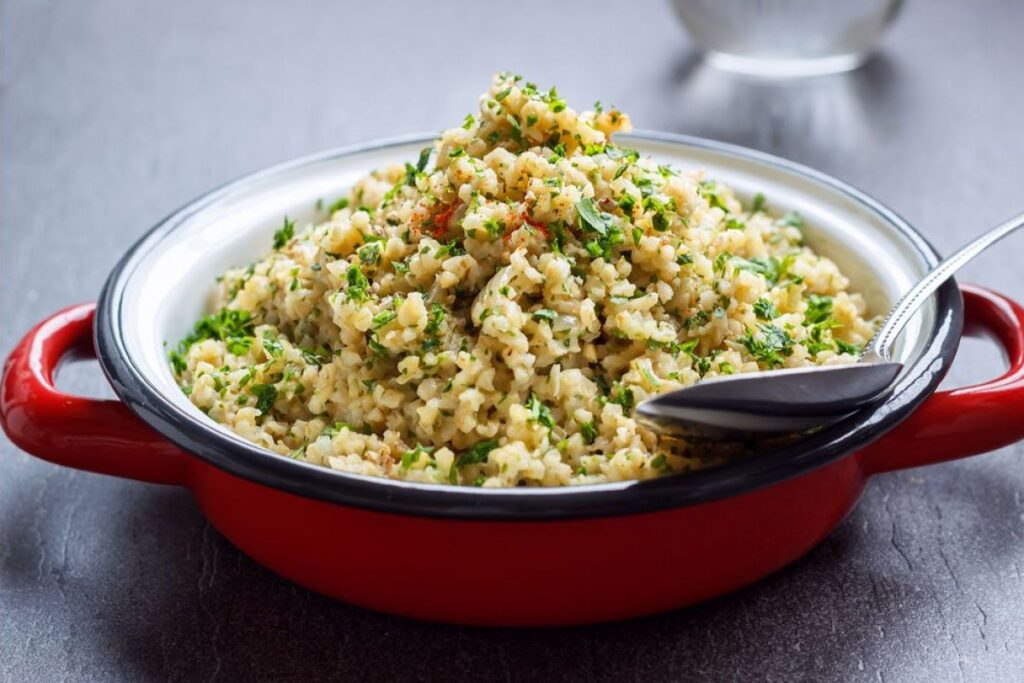
Serve the bulgur pilaf at room temperature rather than piping hot. Serve it with fresh cabbage leaves as an accompaniment. When vine leaves come into season, you can use them instead.
The leaves provide a simple way to serve and eat the bulgur mixture. Diners can spoon portions of the pilaf onto cabbage or vine leaves before eating. This also adds a fresh vegetable element to the grain-based dish.
The combination of tomato paste, olive oil and fresh herbs gives the bulgur a rich but fresh flavor. Spring onions add mild sharpness, while parsley and mint provide aromatic freshness. The coarse bulgur contributes a hearty texture that makes the dish suitable as a substantial side or light meal.
The recipe relies on straightforward preparation and one-pot cooking. Soaking the bulgur before cooking reduces the time required on the stove. The tomato mixture then provides the moisture needed to finish cooking the grains.
With its combination of bulgur, herbs and tomato, the dish can be prepared ahead of serving. Allowing it to rest and cool also makes it convenient for meals served at room temperature. The cabbage or vine leaves provide the final traditional-style accompaniment to the finished pilaf.