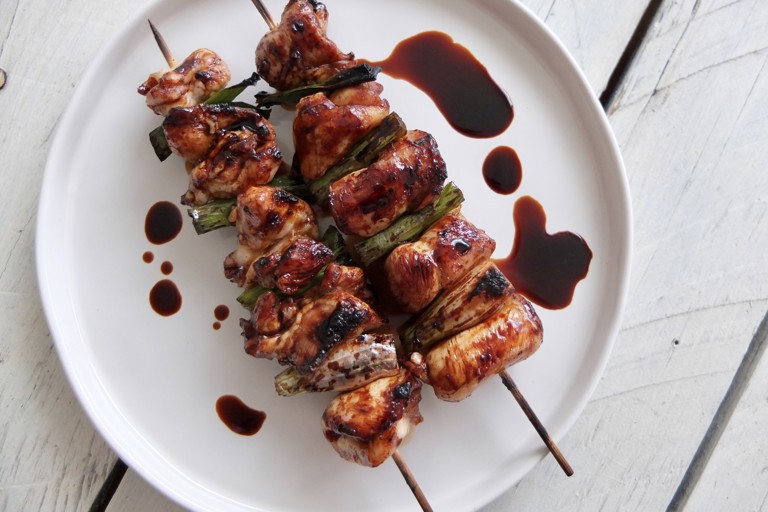

bohemianwanderer – Chicken yakitori offers a classic Japanese grilling technique that transforms simple ingredients into a flavorful meal. Tender chicken thighs, negi, and a sweet-savory glaze create balanced flavors through careful preparation.
The recipe serves as an excellent main course or appetizer. It combines soy sauce, mirin, sake, and fresh ginger to produce the signature glaze associated with traditional yakitori.
Boneless chicken thighs remain the preferred cut because they stay moist during high-heat cooking. Their natural fat content also adds richness while helping the meat retain tenderness.
Negi, a Japanese long onion, accompanies the chicken on each skewer. If negi is unavailable, thick spring onions provide a suitable alternative.
Preparation begins by making the marinade. Soy sauce, mirin, sake, and freshly grated ginger are combined inside a small saucepan.
The mixture is heated over medium-high heat until it reaches a brisk simmer. Gentle boiling allows the liquid to reduce while concentrating its flavors.
After approximately seven minutes, the sauce becomes slightly syrupy. Reducing the mixture by roughly half creates the ideal consistency for glazing.
The finished marinade is transferred into a bowl to cool completely. Cooling prevents the hot liquid from partially cooking the raw chicken.
Meanwhile, boneless, skin-on chicken thighs are cut into evenly sized cubes measuring approximately two centimeters. Uniform pieces ensure even cooking on the grill. Matching sizes create balanced skewers and consistent cooking.
Reduced Soy Marinade Delivers Signature Yakitori Flavor
The ingredients marinate for approximately 30 minutes inside the refrigerator. This period allows the meat to absorb the sweet and savory flavors.
Soy sauce contributes saltiness and deep umami notes throughout the chicken. Mirin balances those flavors with mild sweetness and subtle acidity.
Sake adds another layer of complexity while helping tenderize the chicken. Fresh ginger introduces aromatic warmth that complements the remaining ingredients.
Although the marinating time remains relatively short, the concentrated sauce provides substantial flavor. Longer marination is generally unnecessary because of the reduced glaze.
The remaining marinade is reserved after removing the chicken and onions. It will later serve as a glaze during grilling.
Preparing the glaze first allows every subsequent step to progress smoothly. Organization becomes especially important once grilling begins.
The combination of soy sauce, mirin, sake, and ginger reflects the traditional flavor profile commonly associated with Japanese yakitori restaurants.
Alternating Chicken and Negi Creates Balanced Skewers
Alternating ingredients also promotes even cooking while balancing the flavors in every bite. The onions soften as they absorb juices released by the chicken.
A wire rack is positioned over a rimmed baking tray before cooking begins. The assembled skewers rest across the rack rather than directly on the tray. Close proximity helps develop caramelization quickly. The skewers cook for approximately seven minutes on the first side.
Repeated glazing creates a glossy coating while deepening the flavor. As the sugars in the mirin caramelize, the surface develops an appetizing golden-brown finish. The chicken remains juicy while the onions become lightly charred.
Read More : Tortilla de Patatas Offers a Simple Comfort Meal
The skin attached to the chicken thighs also becomes crisp under the intense heat. This contrast enhances both texture and overall eating experience.
Once fully cooked, the skewers can be served immediately while still hot. They pair well with steamed rice, grilled vegetables, or traditional Japanese side dishes.
By combining tender chicken thighs, fresh negi, and a carefully reduced soy-based glaze, this classic yakitori recipe delivers authentic Japanese flavors using straightforward techniques. The balanced combination of sweet, savory, smoky, and aromatic elements makes the skewers suitable for both casual family meals and entertaining guests.