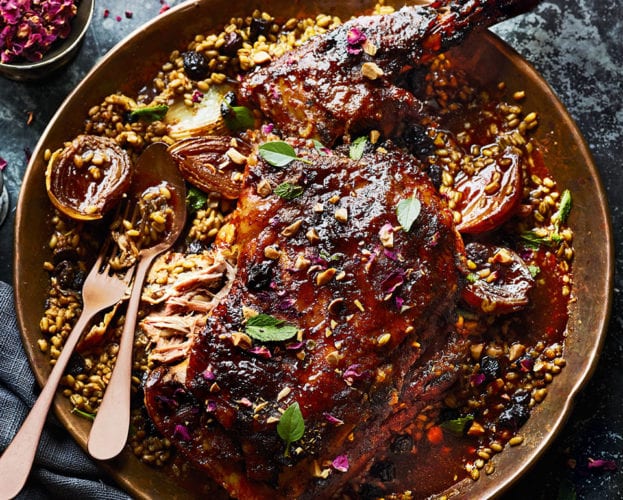

bohemianwanderer – This slow-roasted lamb shoulder combines warm spices, fresh aromatics, and tangy pickled lemon for a deeply flavorful main dish. The overnight marinade allows the spices to fully penetrate the meat before slow cooking.
The recipe requires 15 minutes of preparation, overnight marinating, and approximately five hours and 15 minutes of cooking time. It serves eight people and works well for gatherings or family meals.
Begin preparing the spicy pickled lemon one day before cooking the lamb. Thinly slice two large lemons after removing the seeds and place them into a medium bowl.
Read More : Stuttgart Sign Leicester’s El Khannouss Permanently
Add three tablespoons of lemon juice, two tablespoons of shatta, one tablespoon of caster sugar, half a teaspoon of ground cumin, one-quarter teaspoon of turmeric, and one teaspoon of salt.
Mix the ingredients thoroughly so the lemon slices become evenly coated. Transfer the mixture into a sterilised 350ml jar and seal tightly with a lid.
Store the jar in the refrigerator overnight to allow the flavors to develop fully. The pickled lemon adds acidity and heat that balance the richness of the lamb.
To prepare the marinade, place one roughly chopped onion, three garlic cloves, and a piece of fresh ginger into a food processor. Pulse the ingredients until finely minced.
Add 15 grams of parsley along with the toasted ground fenugreek, cumin, coriander, smoked paprika, turmeric, cinnamon, and cloves. Pulse again briefly until the spices combine evenly.
Scrape down the sides of the processor bowl before adding apple cider vinegar, olive oil, salt, and black pepper. Blend again until the mixture forms a coarse paste.
Place the lamb shoulder into a large roasting tray and pierce it all over with a sharp knife. This step helps the marinade penetrate deeper into the meat.
Rub the spice paste generously across all sides of the lamb until fully coated. Cover the tray and refrigerate overnight to maximize flavor development.
Slow Cooking Creates Tender and Flavorful Lamb Shoulder
Remove the lamb from the refrigerator about one hour before cooking. Allowing the meat to warm slightly encourages more even cooking throughout the roasting process.
Preheat the oven to 170 degrees Celsius or 150 degrees Celsius for fan ovens. Pour 500 milliliters of water around the lamb inside the roasting tray.
Cover the tray tightly with foil to trap moisture during the slow cooking process. Roast the lamb for four hours without removing the cover.
The slow roasting method gradually breaks down connective tissue and creates tender meat that easily separates from the bone. Bone-in lamb shoulder remains especially suitable for long cooking times because of its fat content and structure.
After four hours, remove the foil and continue roasting for another hour. Increase the oven temperature to 180 degrees Celsius during the final 30 minutes to improve browning.
Check the roasting tray occasionally and add an extra 200 milliliters of water if the pan becomes dry. Maintaining moisture helps prevent the meat from drying out during the final stage.
The lamb is fully cooked when it becomes fork-tender and pulls away easily from the bone. Properly cooked shoulder meat should feel soft and moist throughout.
Remove the lamb from the oven and allow it to rest for approximately 20 minutes before serving. Resting helps the juices redistribute evenly through the meat.
Transfer the lamb and pan juices onto a large serving platter. Squeeze fresh lemon juice over the top immediately before serving for additional brightness.
Read More : Jewelled Easter Rice Gains Attention for Festive Tables
Serve the lamb alongside the spicy pickled lemon prepared earlier. The sharp citrus and chili flavors contrast effectively with the rich roasted meat and aromatic spices.
The warm spice blend combines earthy cumin, coriander, and fenugreek with sweeter cinnamon and cloves. Smoked paprika adds additional depth while turmeric contributes color and subtle bitterness.
This dish pairs especially well with rice, flatbreads, or roasted vegetables. The cooking juices can also be spooned over side dishes for additional flavor.